How I reduced churn and cut onboarding by 60 days
How I reduced churn and cut onboarding by 60 days
Redesigning the digital consulting experience
Evolutto

How I reduced churn and cut onboarding by 60 days
Redesigning the digital consulting experience
About one and a half years
UX/UI Designer
Evolutto is a B2B2C system with more than 15 years of development, focused on management, customer service and scaling of consulting services.
In 2023, Evolutto faced a retention and satisfaction crisis:
Companies, Evolutto's clients, were canceling their subscriptions in droves. Beyond criticisms of the platform and its functioning, they claimed that their clients couldn't use the system, which made project execution impossible and directly affected cash flow.
This had been going on for several months, reaching a critical point:
Without proper platform introduction, clients have no way to use it—with one, it improves about 50%. Without guidance, they don't know how to navigate it, what the terms mean, what to do, etc.
Feedback from an Evolutto client (2023)
Comments like this were recurring throughout the research.
The results obtained at the end of the entire project were remarkably positive
For Evolutto implementation in companies
From companies previously motivated by dissatisfaction with the platform
Due to greater customer autonomy, improved usability and better management
Significantly reducing companies' support spending
Experience of companies and customers much more intuitive and self-explanatory
The new interface was designed to make Evolutto a reference in consulting services platform
Allowing more companies from different areas to see Evolutto as the ideal ecosystem for their business model
After understanding the scenario, I defined my mission:
I started a comprehensive exploratory research, collecting survey responses, analyzing documents and platform usage data, conducting interviews with stakeholders, companies, and customers.
The complexity of the problem and the Evolutto context required a phased investigative approach, driven by the lack of prior data about how end customers actually used the platform.
See the research in more detailThe research plan was designed for a strategic, incremental approach to understanding end customers. Because of this, it was built iteratively as the research progressed, evolving as I learned from each phase.
The insights from each stage informed the design of the next one
The research revealed the unexpected:
Customers are dissatisfied with Evolutto because they benchmark it against more modern systems: prettier interfaces, "Netflix-like" experiences, faster platforms, richer features, AI integrations, etc.
The real issue was Evolutto's rigid, poorly optimized interface that made management, adoption, and project execution difficult for both companies and their end customers
I discovered that the root of the problems went far deeper than just customer experience, as we initially suspected. In fact, I identified 7 critical pillars that were undermining not only the end customer experience, but most importantly, the operational work of the companies themselves:
Complex and non-intuitive structure, depending on extensive onboarding, recorded tutorials and constant support
Information dispersion and obstacles in communication between companies and customers
Unsatisfactory tools for individual management, customers, projects and data analysis
Outdated interface, confusing navigation, without aesthetic and conceptual patterns, technical language distant from the reality of most users
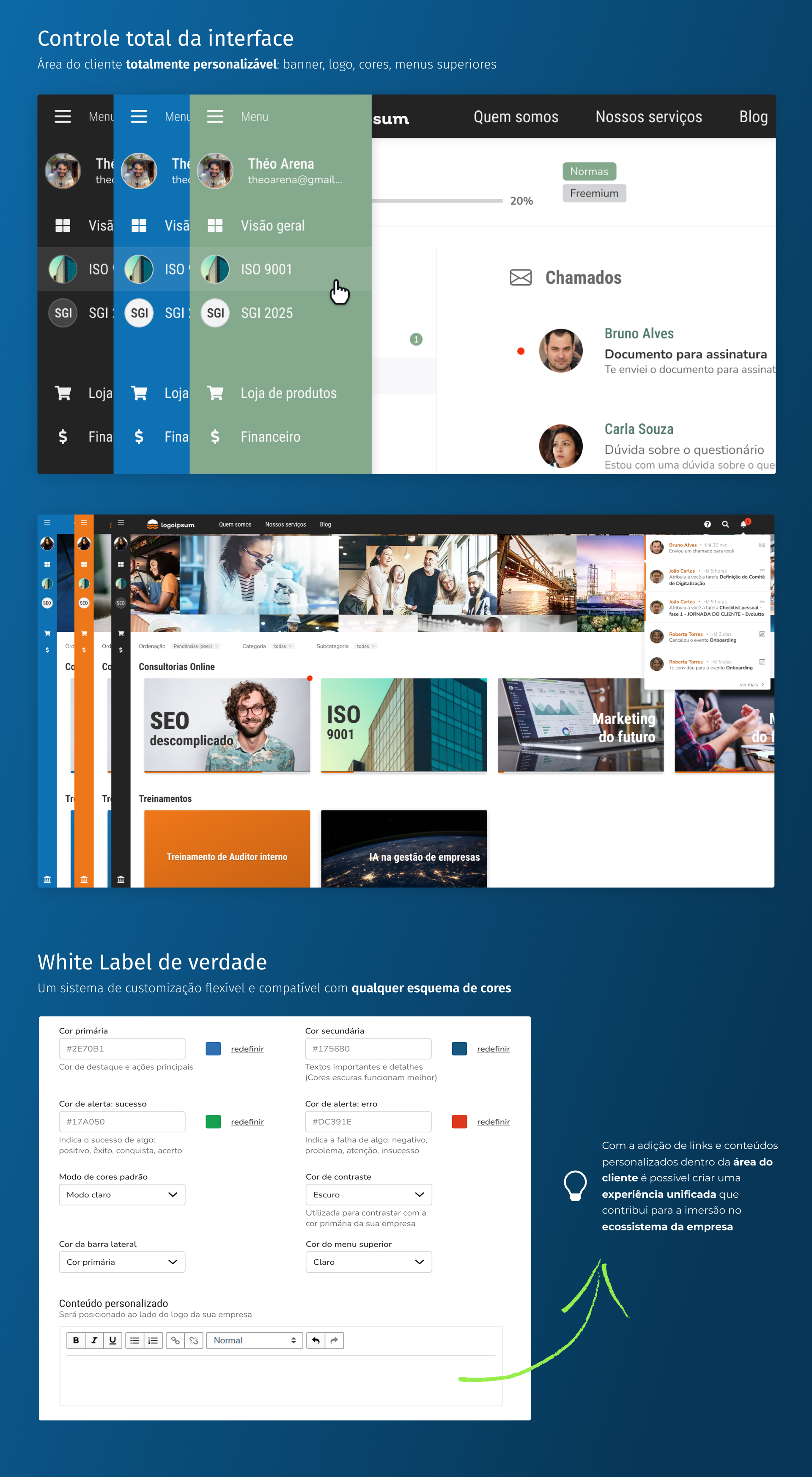
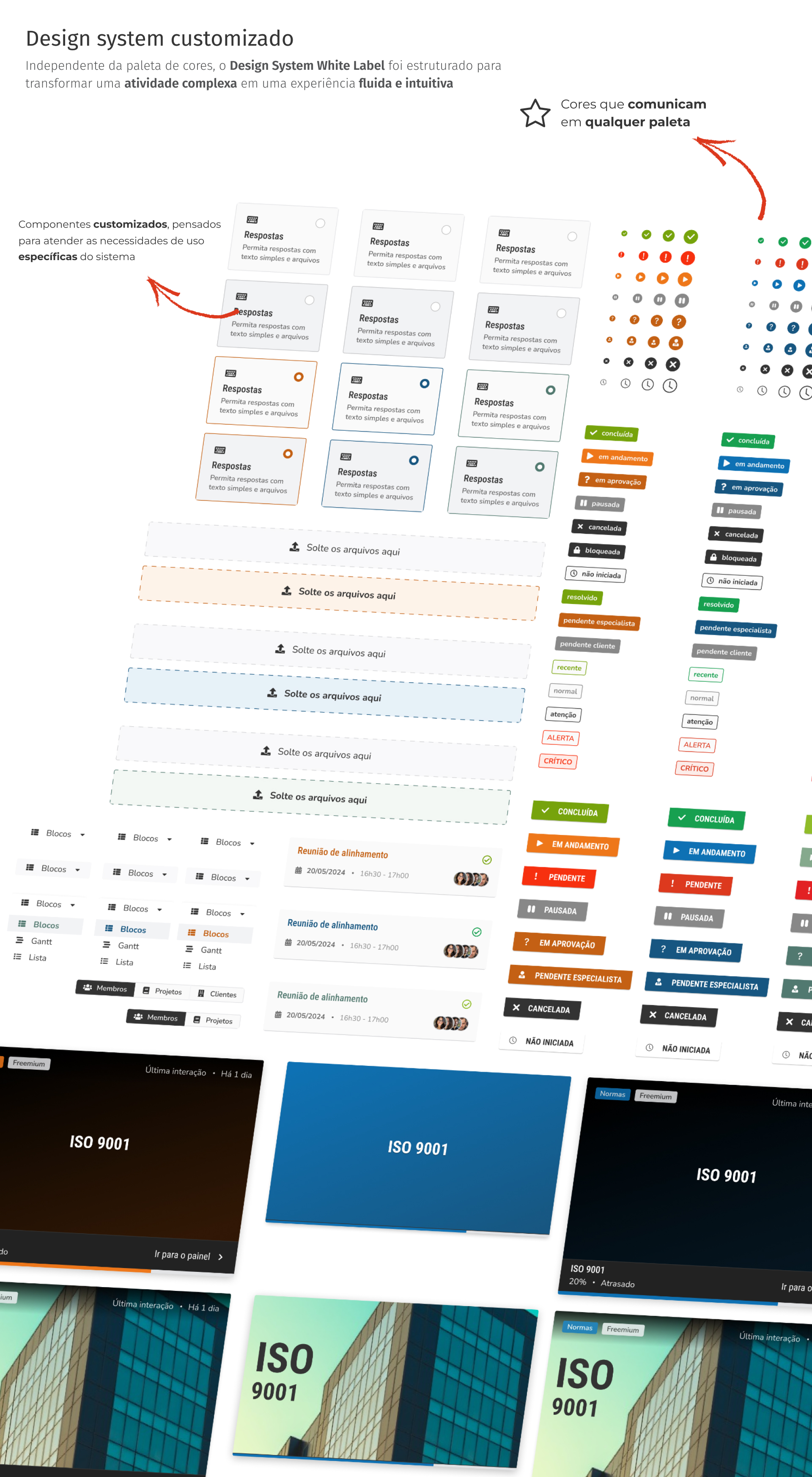
White Label experience that caused strangeness and doubts in customers, system with little flexibility for hybrid and face-to-face models, platform visual was an explicit reason for complaints
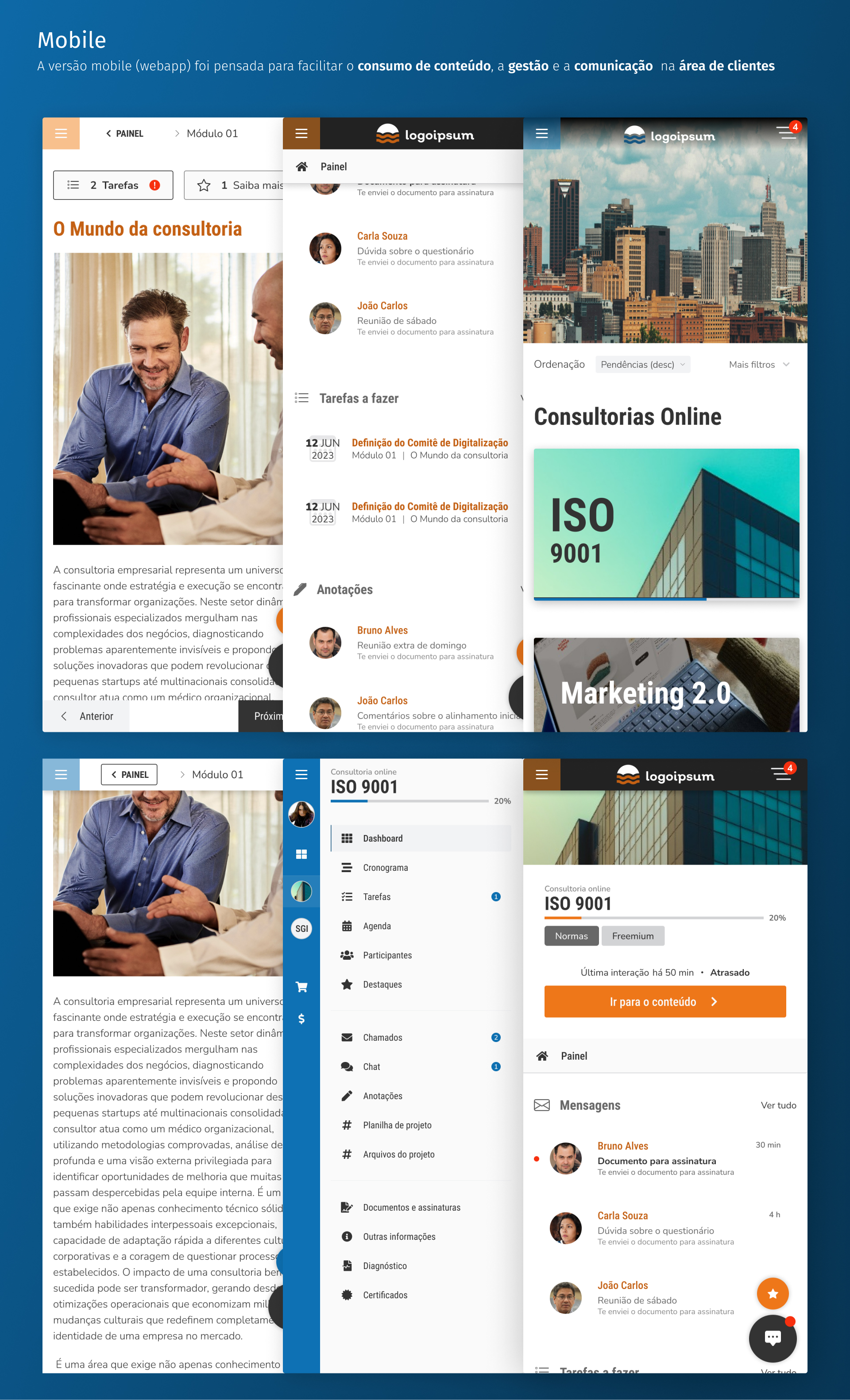
Clear demand for use on mobile devices, need for real-time communication within the Evolutto environment (text and voice)
Inability to connect Evolutto with other tools and services already incorporated into the daily lives of companies, causing data dispersion and damaging the perception of value
Acting in the identified areas would:
Based on research results and a careful assessment of feasibility and ROI, I proposed five targeted interventions that would deliver the highest impact on perceived value and address the most critical pain points:
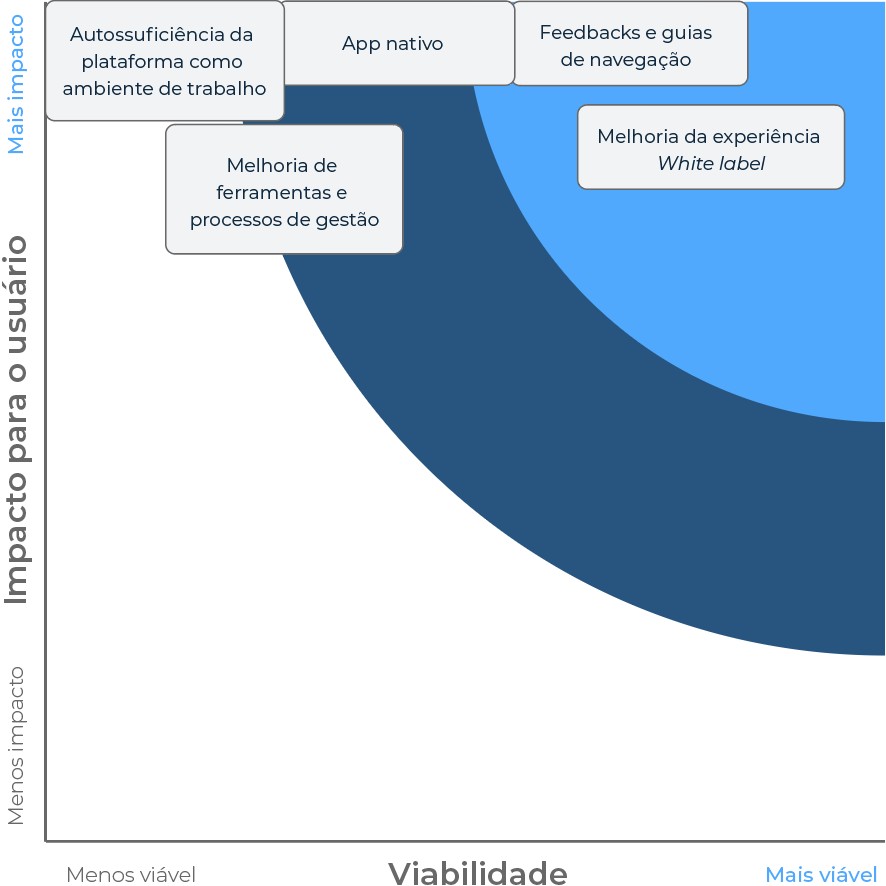
Conversations with stakeholders shaped the roadmap:
A native mobile app was not prioritized.
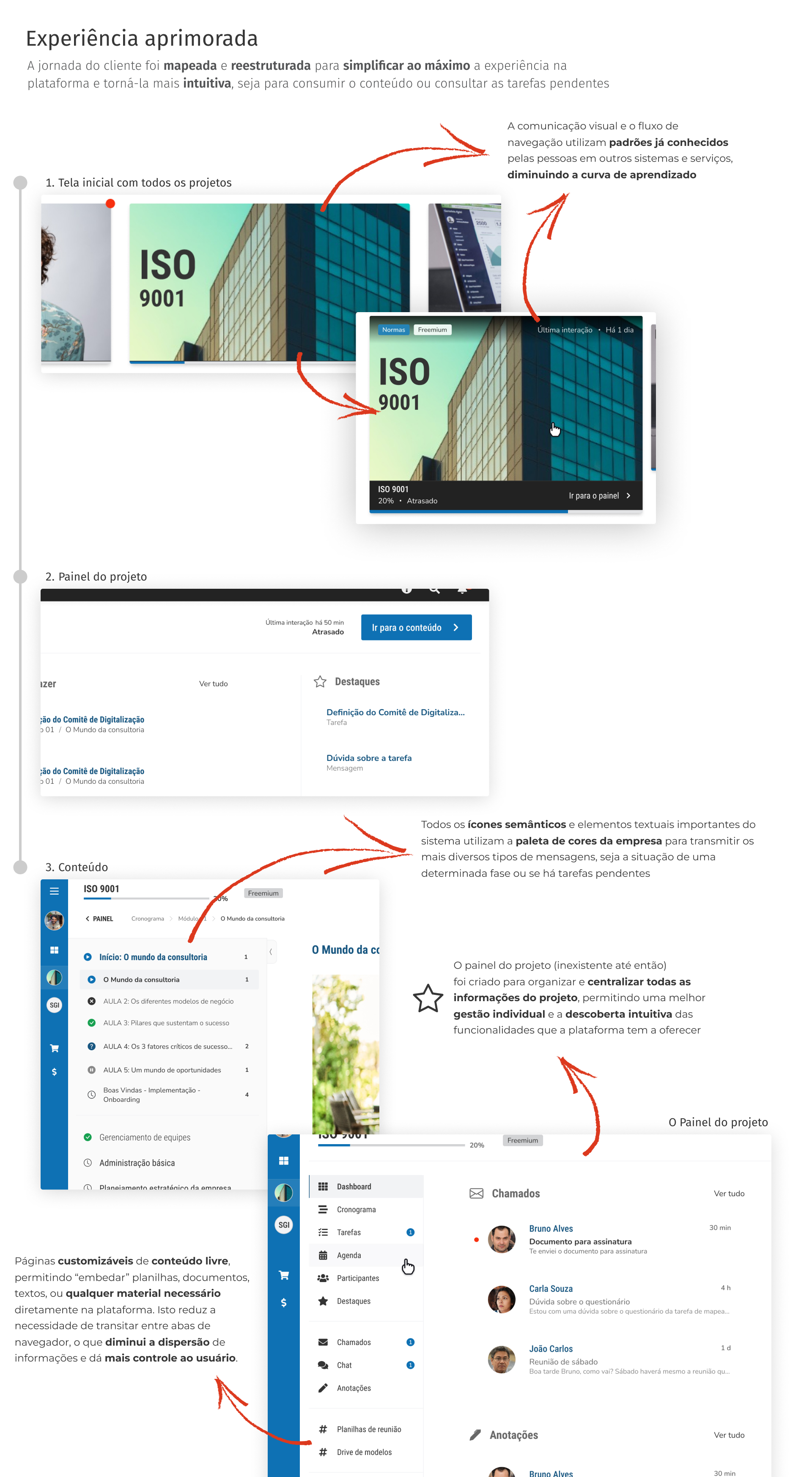
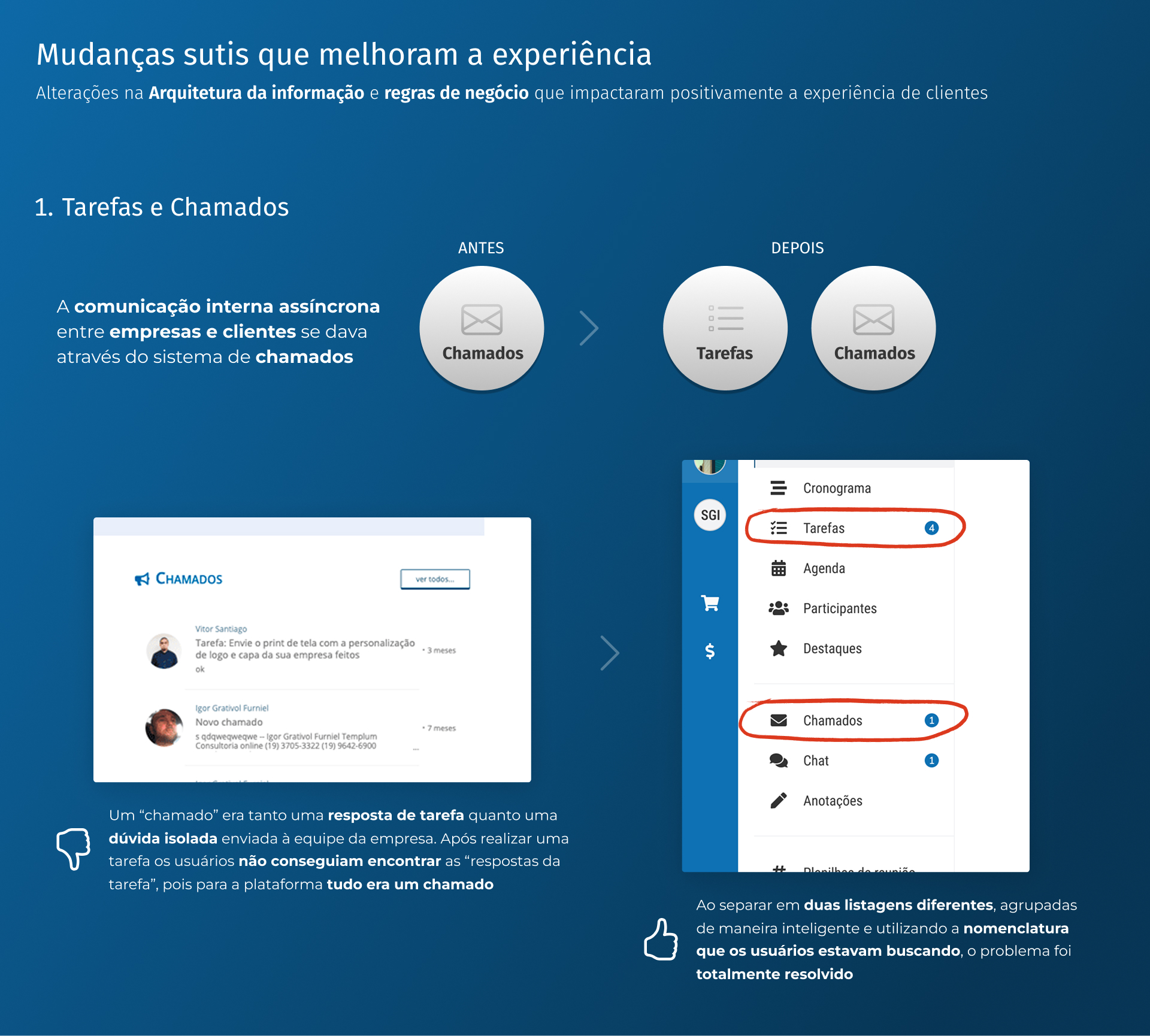
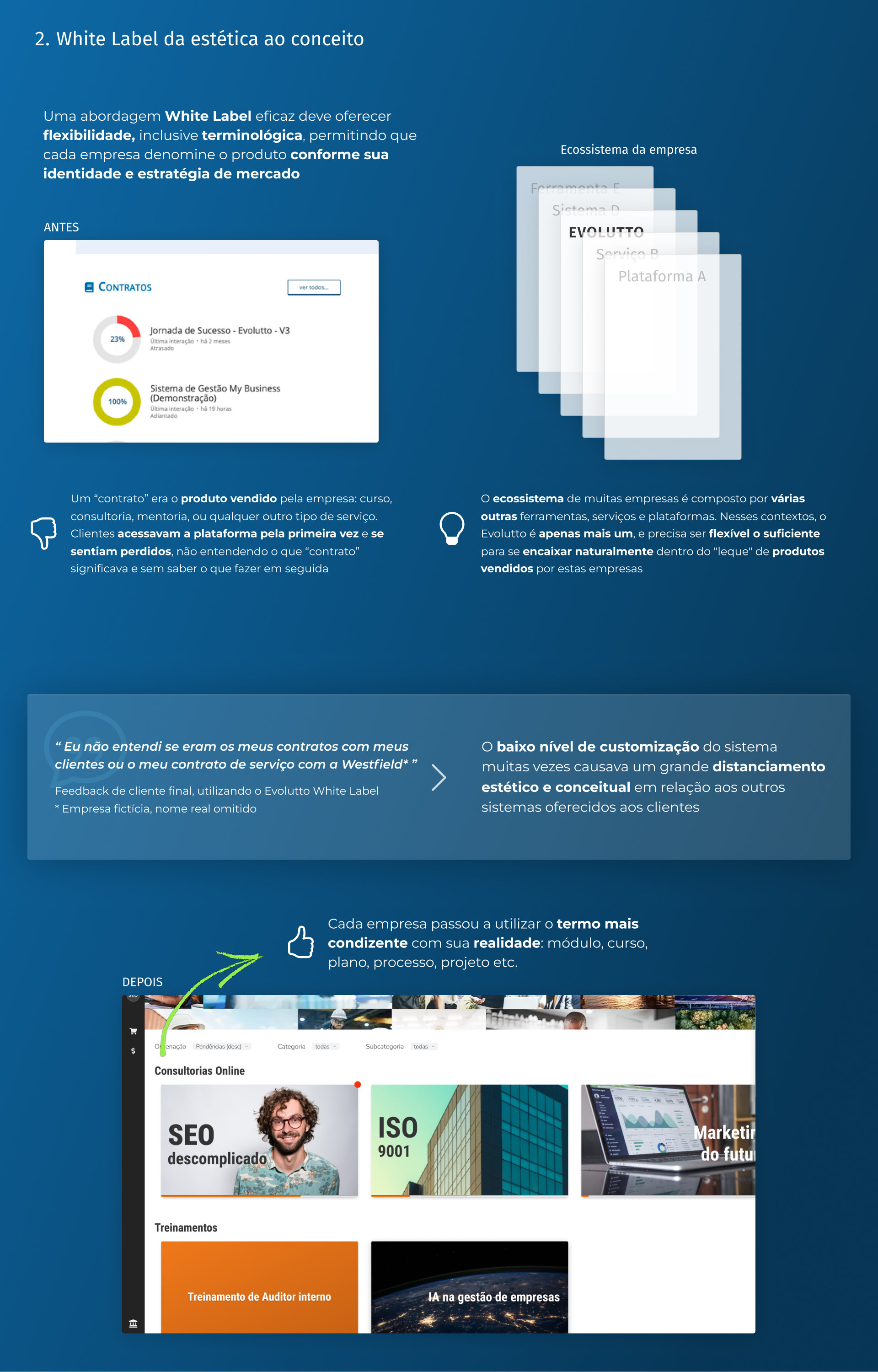
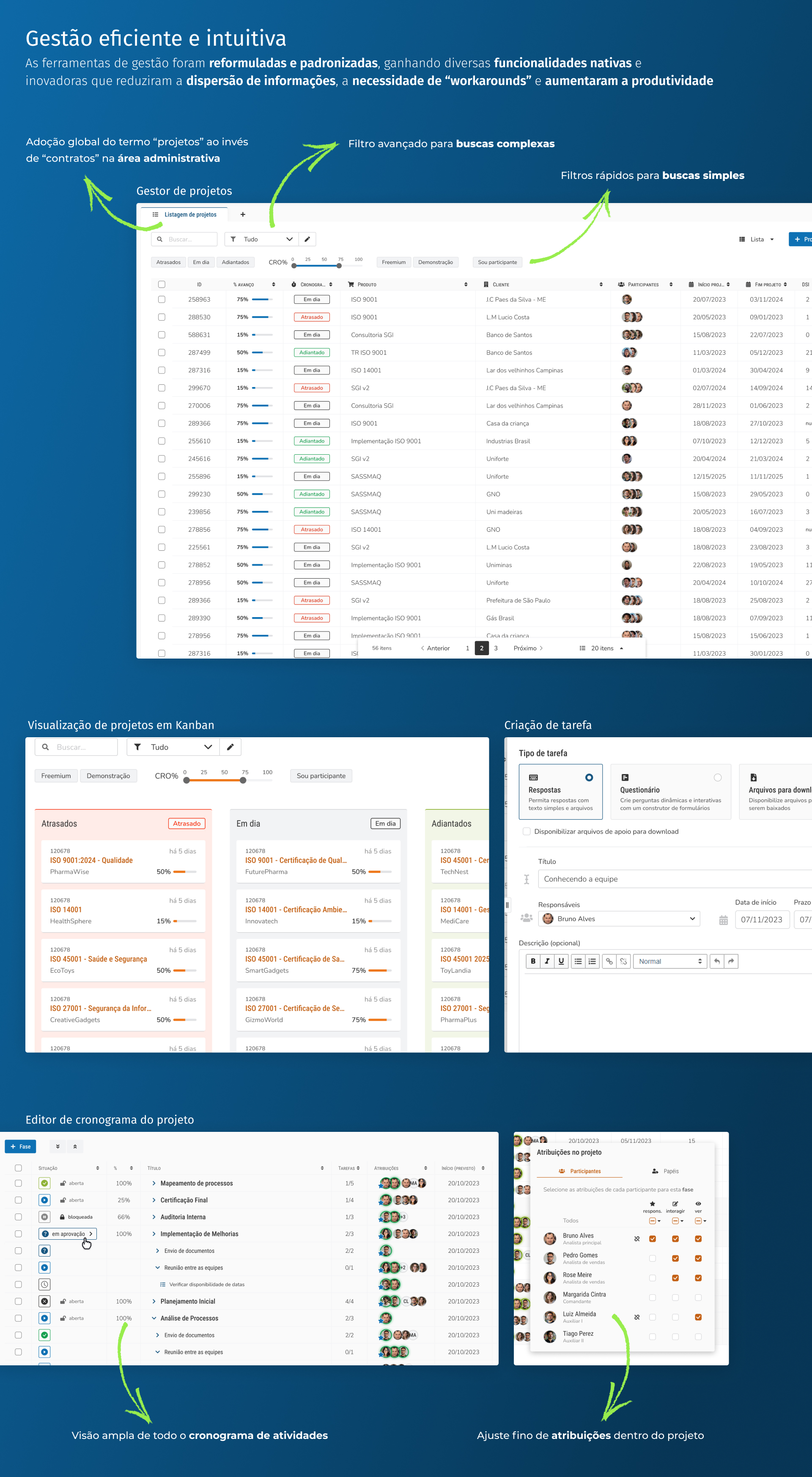
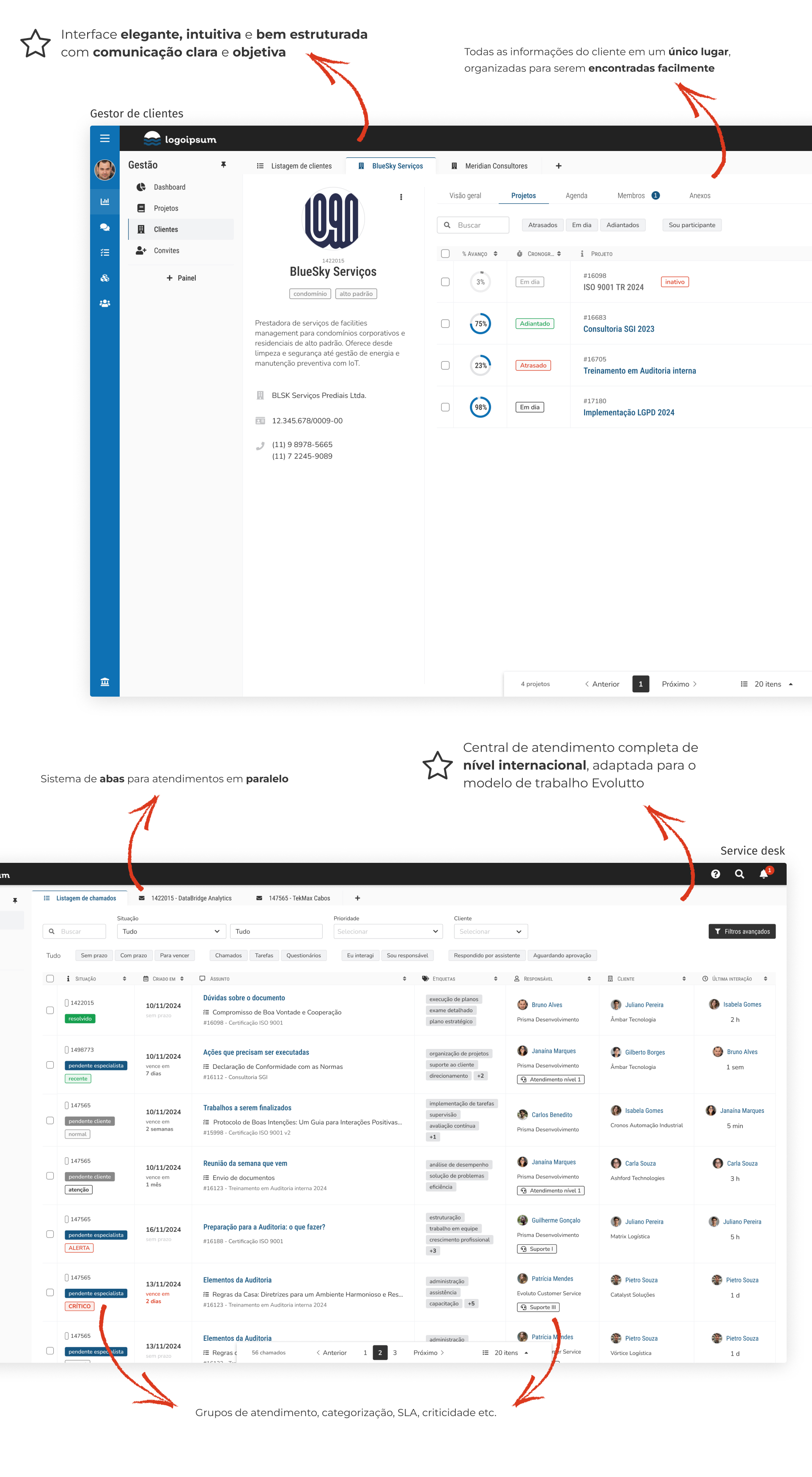
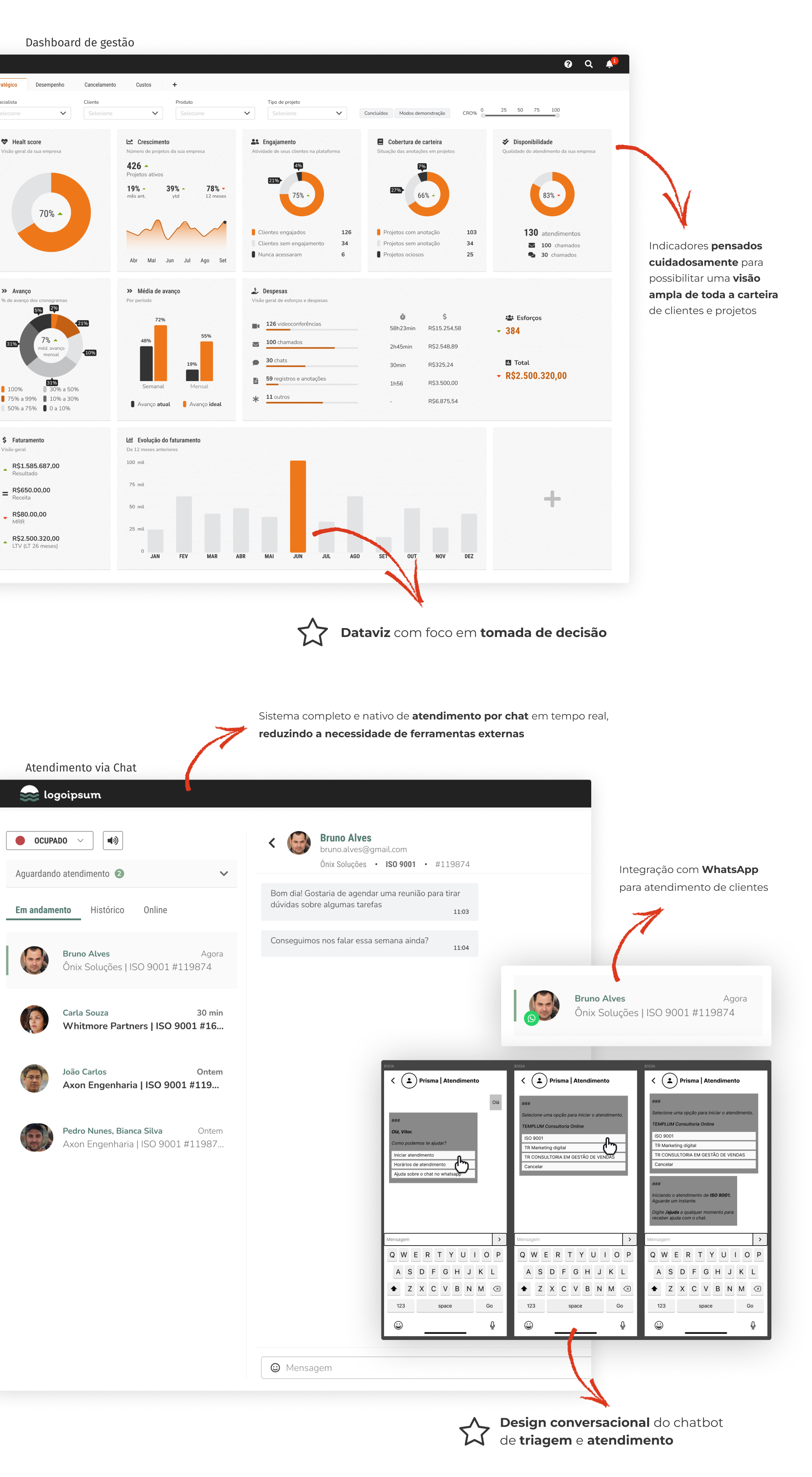
More details coming soon.
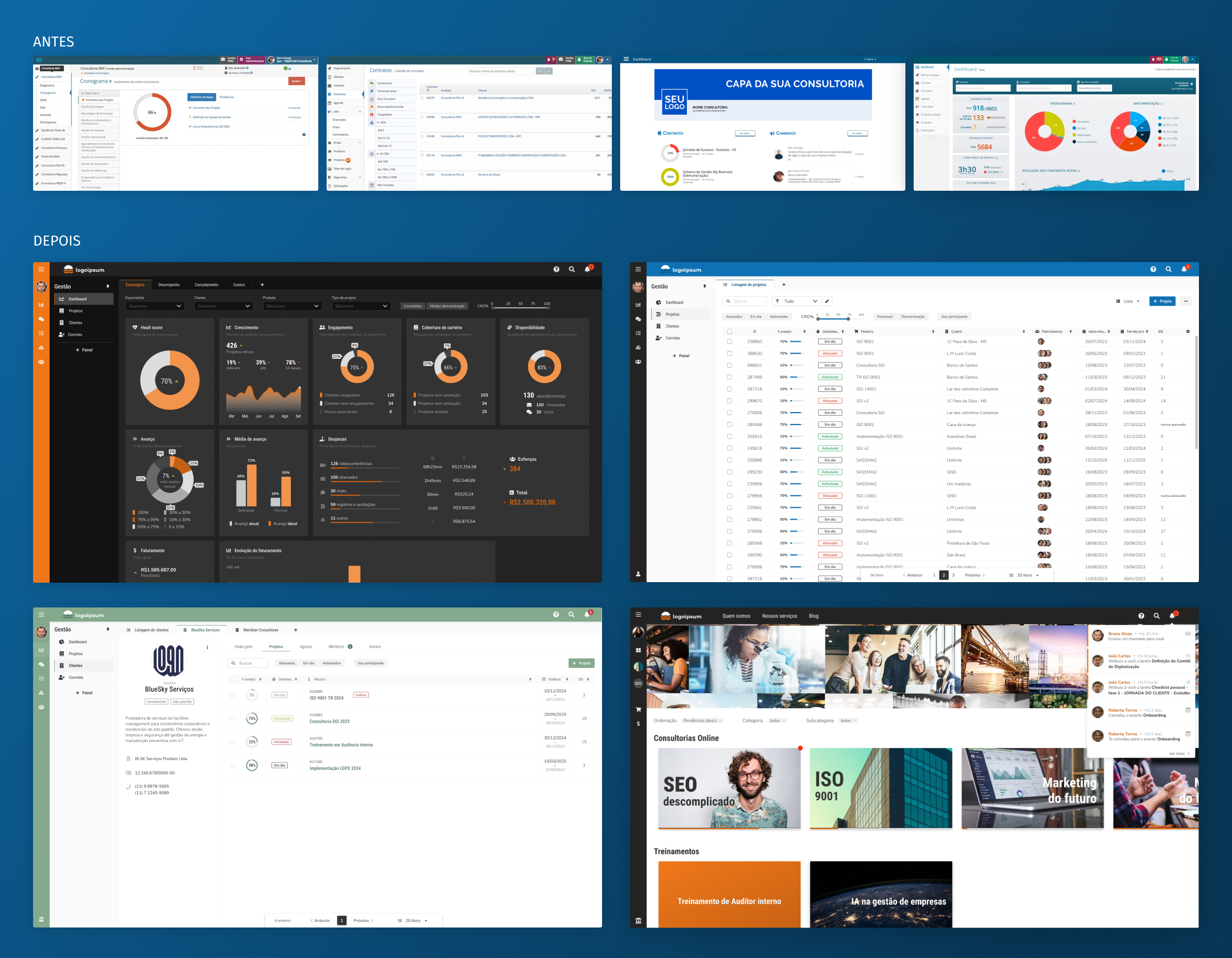

Initially, we thought the problems were isolated to how customers experienced the platform. But the research told a different story: customer frustrations were largely downstream reflections of the companies' own struggles to use and adapt Evolutto properly.
Each problem cascaded into the next:

Many companies execute complex, multi-faceted projects with clients that span multiple departments and large teams. To run them efficiently, they need key metrics, rich analytics, and actionable data to drive smart decisions.
Instead, Evolutto's rigid workflow forced companies to:
While these workarounds addressed some pain, they came with steep costs:

The platform's rigid structure was too opinionated for companies outside the pure consulting space, leading to:

Evolutto had always used the term "contract" in its interface to describe what companies sold to their customers—whether a consulting engagement, a course, etc.
" I wasn't sure if you meant my contracts with my clients or my service agreement with Westfield* "
Feedback from an end user testing Evolutto White Label*Fictional company; real name withheld
This confusion came up during a customer interview in our research phase.
The company operated as a health professional staffing network, using Evolutto as a B2B relationship platform. One of the professionals they worked with told us she was confused by the "contract" terminology when navigating Evolutto.
Westfield* offered several tools to its partner network, including a contract and service management platform. So the term "contract" created ambiguity—it was unclear whether it referred to Evolutto's "partner relationship environment" or one of their other systems. She also struggled with other terminology and concepts, and felt visually disoriented by how Evolutto looked compared to the other platforms in Westfield's suite.

About 95% of all users accessed the platform solely from desktops, yet there was overwhelming demand for a genuine mobile-first experience. The research painted a clear picture: widespread dissatisfaction with mobile usability.
" Without someone on the team who already thinks digitally, we probably won't take the project. There's no middle ground. (...) The project manager feels like it's too much overhead. It's way easier when someone just asks us what we need and we work with that. (...) If there was a proper mobile app, that would change everything. "
Feedback from a company leader
A true mobile experience proved absolutely critical because:
This case illustrates how intentional, evidence-based redesign—grounded in rigorous user research and data analysis—can pull a SaaS platform back from the brink of systemic failure and reposition it on solid, well-informed design principles.